 KVSP
KVSP Jack Smith says ‘no historical analog’ for Trump’s actions around 2020 election, denies political influence
Written by ABC Audio All Rights Reserved on January 1, 2026
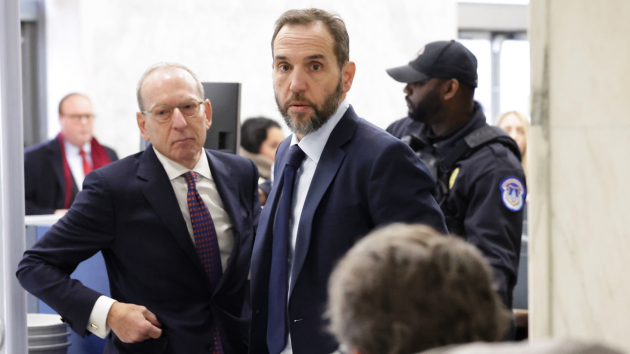
(Washington) Former special counsel Jack Smith defended his decision to bring charges twice against President Donald Trump — telling lawmakers in a closed-door deposition earlier this month that his team “had proof beyond reasonable doubt in both cases” that Trump was guilty of the charges in the 2020 election interference and classified documents cases.
And Smith fervently denied that there was any political influence behind his decision — contrary to what the Republicans on the House Judiciary Committee, who requested the testimony, alleged — such as pressure from then-President Joe Biden or Attorney General Merrick Garland.
“No,” Smith responded continuously.
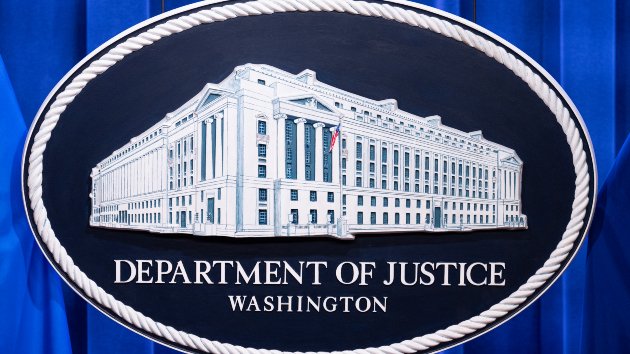
Just over an hour before the closed testimony on Dec. 17, the Department of Justice sent an email to Smith’s lawyers preventing him from discussing the classified documents case, according to the 255-page transcript of the deposition, released Wednesday by the Judiciary Committee along with a video of the hearing.
This meant Smith was unable to answer most questions on that case and the deposition — intended to ask questions about the alleged weaponization of the DOJ against Trump and his allies — mainly focused on the 2020 election case instead.
Smith’s counsel said the DOJ also refused to send a lawyer to advise Smith on whether his statements were in line with their determination of what he could or could not say regarding the cases, according to the deposition. Smith did say, however, that Trump “obstructed” the classified documents investigation “to conceal his continued retention of those documents.”
Trump repeatedly denied the allegations in both felony cases, which were unprecedented against an American president, and decried them as part of a “witch hunt.” Smith, one of Trump’s frequent targets on social media, ultimately dropped the cases after Trump’s reelection because he said that he was constitutionally prohibited from prosecuting a sitting president.
Smith asserted in his final report that “but for Mr. Trump’s election and imminent return to the Presidency, the Office assessed that the admissible evidence was sufficient to obtain and sustain a conviction at trial.”
During the deposition, Smith argued, as he had in the past, that Trump “President Trump engaged in a criminal scheme to overturn the results of the 2020 election and to prevent the lawful transfer of power.”
When asked if Trump was responsible for the violence at the Capitol on Jan. 6, Smith said “Our view of the evidence was that he caused it and that he exploited it and that it was foreseeable to him.”
Smith argued that Trump’s claims that he won the 2020 election were not protected free speech because they were intended to target a government function.
“There is no historical analog for what President Trump did in this case. As we said in the indictment, he was free to say that he thought he won the election. He was even free to say falsely that he won the election,” Smith said. “But what he was not free to do was violate Federal law and use knowing — knowingly false statements about election fraud to target a lawful government function. That he was not allowed to do. And that differentiates this case from any past history.”
And Smith said Trump wrote a tweet that “without question in my mind endangered the life of his own Vice President” during the Jan. 6 attack on the Capitol.
Smith said several witnesses who said they voted or campaigned for Trump — including the Speaker of the House in Arizona and Speaker of the House in Michigan — were the foundation of the case.
“We had an elector in Pennsylvania who is a former Congressman who was going to be an elector for President Trump who said that what they were trying to do was an attempt to overthrow the government and illegal. Our case was built on, frankly, Republicans who put their allegiance to the country before the party,” Smith said.
Asked why Smith did not charge any of the alleged co-conspirators, Smith said “As we stated in the final report, we analyzed the evidence against different co-conspirators. We — my staff determined that we did have evidence to charge people at a certain point in time. I had not made final determinations about that at the time that President Trump won reelection, meaning that our office was going to be closed down.”
Smith said he had evidence that Trump ordered the alleged co-conspirators to place phone calls to senators the night of Jan. 6 to try and delay the certification vote.
The committee pressed Smith why he did not speak with Trump allies Steve Bannon, Roger Stone or Peter Navarro as part of their investigation.
“We pursued the investigative routes that we thought were the most fruitful,” Smith argued. “I didn’t think it would be fruitful to try to question them.”
And they pressed him on seizing phones of members of Congress. Smith said only Scott Perry had his phone seized and no senators did.
“I don’t recall that,” Smith said when asked if he wanted a search warrant for the content of any text messages from members of Congress.
Smith said he just wanted toll records and confirmed that he approved the subpoenas.
“If Donald Trump had chosen to call a number of Democratic Senators, we would have gotten toll records for Democratic Senators. So responsibility for why these records, why we collected them, that’s — that lies with Donald Trump,” Smith said.
Smith recalled that Jim Jordan, the Judiciary Committee chair, was in direct contact with White House on Jan. 6, according to an interview his team conducted with Mark Meadows.
Meadows stated that Jordan was scared. “I’ve never seen Jim Jordan scared of anything,” Meadows said, according to Smith.
Smith said he is “eyes wide open” that he believes Trump will seek retribution against him.
“I came here. I was asked to come here,” he added.
Copyright © 2025, ABC Audio. All rights reserved.